After Romney's defeat, the ACA remained in effect for the period of Obama's presidency regardless of Republican efforts to repeal it. In the 114th Congress, Republicans passed an expense that would have repealed much of the ACA, but the bill was vetoed by Obama. After winning the 2016 governmental election, President Donald Trump guaranteed to "repeal and replace" the ACA with a brand-new law.
government, however with 52 seats in the 100-member Senate, Republicans would still have to count on at least some Senate Democrats to overcome a filibuster. However, Senate rules offer an unique budget plan guideline called reconciliation, which permits particular budget-related expenses to bypass the filibuster and be enacted with a simple bulk vote.
In 2015, U.S. healthcare costs were approximately $3. 2 trillion, or almost $10,000 per individual usually. Significant classifications of expense include healthcare facility care (32%), physician and medical services (20%), and prescription drugs (10%). U.S. costs in 2016 were significantly greater than other OECD countries, at 17. 2% GDP versus 12.
For scale, a 5% GDP difference represents about $1 trillion or $3,000 per individual. Some of the many reasons cited for the expense differential with other nations consist of: Greater administrative expenses of a personal system with multiple payment processes; higher costs for the exact same services and products; more expensive volume/mix of services with greater usage of more pricey professionals; aggressive treatment of extremely ill senior versus palliative care; less use of federal government intervention in rates; and greater earnings levels driving greater need for health care.
A Biased View of Why Doesn't The United States Have Universal Health Care
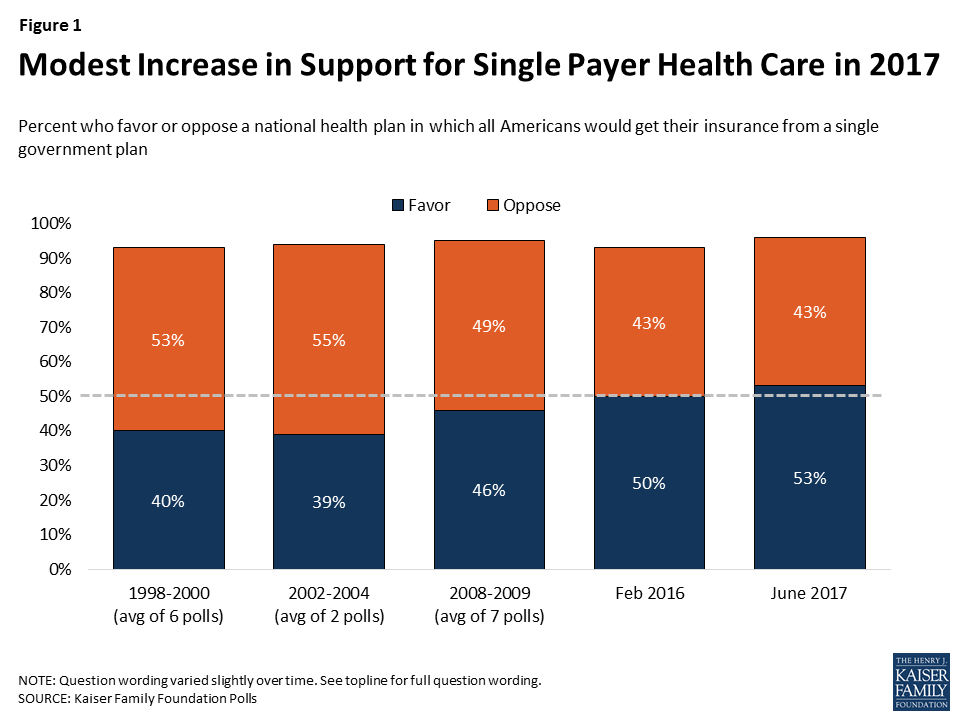
There is continuous dispute whether the existing law (ACA/Obamacare) and the Republican options (AHCA and BCRA) do enough to deal with the cost obstacle. Both the Republican House AHCA and Senate BCRA expenses have actually proposed major reforms relative to current law (ACA) that would substantially minimize the number of persons covered, reasonably lower the deficit spending over a years, reverse the tax increases on the top 5% (generally the top 1%), considerably cut Medicaid payments (25-35%) that benefit lower-income persons, and broaden option by allowing lower quality insurance coverage to be bought at lower costs for the young and middle-aged.
States would be permitted more flexibility in establishing important health advantages (i. e., insurance coverage policy material). Modification tax credit/subsidy solutions used to help pay for insurance coverage premiums (initially age-based, later modified to income-based) and get rid of a "cost-sharing aid" that minimized out-of-pocket expenses. Offer moneying to health insurance companies to stabilize premiums and promote market involvement, by means of a "Long-Term State Stability and Innovation Program" with functions comparable to a high-risk pool.
Decrease Medicaid payments relative to current law, by capping the development in per-enrollee payments for non-disabled children and non-disabled adults, by using a lower inflation index. Repeal taxes on high-income earners developed under ACA/Obamacare, rescind the yearly cost on health insurance companies, and delay the excise tax on high premium health insurance (the so-called "Cadillac tax").
young people, instead of three times, unless the state sets a various limitation. Remove federal cap on the share of premiums that may go to insurance providers' administrative costs and revenues (the "minimum medical loss ratio"). Popular opinion regarding the Republican politician House (AHCA) and Senate (BCRA) expenses was very negative (i.
The Ultimate Guide To When Is The Vote On Health Care
Views were split along party lines. For instance, the monthly Kaiser Family Structure health tracking survey for Might 2017 showed that: More view the Republican politician AHCA unfavorably (55%) than positively (31%). Views are divided along celebration lines, with % in favor of AHCA: Democrats 8%, Independents 30%, Republicans 67%. Although traditionally more individuals viewed the present law (ACA/" Obamacare") unfavorably than positively, in Might 2017 more had a beneficial view (49%) than undesirable (42%).
Healthcare experts from across the political spectrum liberal, moderate, and conservative concurred that your home Republican politician healthcare costs was unfeasible and struggled with fatal flaws, although particular objections differed depending on ideological viewpoint (how does universal health care work). Experts concurred that the bill fell far except the goals laid forth by President Donald Trump throughout his 2016 project "Budget friendly coverage for everybody; lower deductibles and health care costs; much better care; and zero cuts to Medicaid" since the expense was (1) "almost specific" to decrease total health care coverage and boost deductibles and (2) would phase out the Medicaid expansion.
CBO approximated in May 2017 that under the Republican AHCA, about 23 million fewer people would have medical insurance in 2026, compared with present law. AHCA (Republican healthcare costs) effect on earnings distribution, since the year 2022. Net benefits would go to families with over $50,000 earnings typically, with net expenses to those listed below $50,000.
Cuts to Medicaid more than offset tax cuts, leading to moderate deficit reduction. Modifications in Medicaid Spending Under the Better Care Reconciliation Act Compared to CBO's Extended Standard Share of Nonelderly Grownups Without Medical Insurance Coverage Under Current Law and the Better Care Reconciliation Act, by Age and Income Classification, 2026 CBO projections of persons without medical insurance under 65 years of age (%) under numerous legislative propositions and existing law.
What Does What Are Health Care Disparities Mean?
e., the actuarial worth, or percent of costs a given policy is anticipated to cover). Other groups have assessed some of these components, as well as the distributional effect of http://marioxiit482.bravesites.com/entries/general/how-do-health-care-tax-credits-work-truths the tax modifications by income level and effect on job development. The results of these analyses are as follows: According to each of the CBO scores, passage of the Republican costs would result in a significant reduction in the variety of individuals with medical insurance, relative to current law.
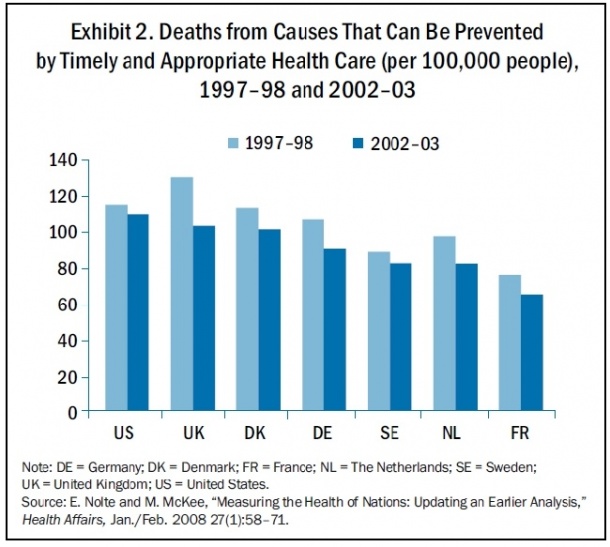
In 2018, many of the decrease would be triggered by the elimination of the charges for the specific mandate, both directly and indirectly. Later on reductions would be because of decreases in Medicaid enrollment, elimination of the individual required penalty, subsidy decrease, and higher expenses for some individuals. By 2026, an estimated 49 million individuals would be uninsured under the Senate BCRA, versus 28 million under present law.
According to White Home Communications Director Michael Dubke, the analysis attempted to use similar approach as the CBO. Other people and organizations such as the Brookings Organization and S&P approximated substantial coverage losses due to the AHCA. According to a report published by the Center on Budget and Policy Priorities, the legislation would lead to 3 million more kids (specified as persons under 18 years of ages) losing healthcare coverage.
Roughly $1. 2 trillion less would be invested over that time, while $900 billion less in tax earnings would be gathered. Medicaid costs would be cut considerably. Taxes on the approximately top 5% of income-earners under existing law would significantly drop. CBO AHCA Modified March 24: In negotiations after the preliminary report, the law was customized such that the CBO approximated the deficit reduction would amount to about $150 billion over a years.
Getting My What Is Universal Health Care To Work
For scale, CBO has actually estimated that the U.S. will include approximately $9. 4 trillion to the debt overall over the 2018-2027 period, based upon laws in place as of January 2017. The $321 billion for that reason represents a decrease of about 3. 5% of the total financial obligation increase over the decade, while the $150 billion is about 1.